
On Wednesday, May 13, 2026, the Union Cabinet, chaired by Prime Minister Narendra Modi, cleared a series of high-impact infrastructure and energy projects designed to accelerate India’s transition into a global manufacturing and logistics powerhouse.
The most prominent of these is the Ahmedabad (Sarkhej)-Dholera Semi-High-Speed Rail Corridor, a landmark project that marks India’s first foray into indigenous semi-high-speed rail on broad gauge.
1. Ahmedabad-Dholera Semi-High-Speed Rail Project
This ₹20,667 crore project is a centerpiece of the PM Gati Shakti National Master Plan and will serve as the primary transit artery for the Dholera Special Investment Region (SIR).
- Corridor Details: A 134 km long double-line rail corridor connecting Sarkhej (Ahmedabad) to Dholera.
- Speed & Technology: Designed for speeds up to 220 kmph, with operational speeds of 200 kmph. It utilizes indigenously developed technology under the Namo Bharat (Regional Rapid Transit System) framework.
- Key Connectivity:
- Direct link to the upcoming Dholera International Airport.
- Seamless access to the Lothal National Maritime Heritage Complex (NMHC).
- Improved commuting for 284 villages with a combined population of approximately 5 lakh.
- Economic Impact: The corridor is expected to be completed within four years, transforming Dholera into a highly accessible industrial smart city and a magnet for global semiconductor and manufacturing investments.
2. Surface Coal & Lignite Gasification Scheme
In a major push toward energy security and “Aatmanirbharta,” the Cabinet approved a ₹37,500 crore incentive scheme to promote the gasification of India’s vast coal and lignite reserves.
- Objective: To gasify 100 Million Tonnes (MT) of coal by 2030, converting it into “synthesis gas” (syngas).
- Import Substitution: The project aims to drastically reduce India’s reliance on imported LNG, urea (20%), ammonia (100%), and methanol (80%).
- Employment: The scheme is projected to create 50,000 direct and indirect jobs across 25 projects in coal-bearing regions.
- Policy Support: The government has extended coal linkage tenures to 30 years, providing long-term certainty for private and public sector investors.
3. Modernization of Nagpur International Airport
The Cabinet also greenlit a long-awaited plan to upgrade and modernize the Dr. Babasaheb Ambedkar International Airport in Nagpur through a Public-Private Partnership (PPP) model.
- Project Lead: GMR Nagpur International Airport Limited (GNIAL) will handle the modernization under a 30-year concession.
- Vision: To transform Nagpur into a world-class multi-modal international cargo hub (MIHAN).
- Capacity Goal: The phased development aims for an ultimate handling capacity of 30 million passengers annually, positioning Nagpur as a central aviation hub for India.
Strategic Rationale
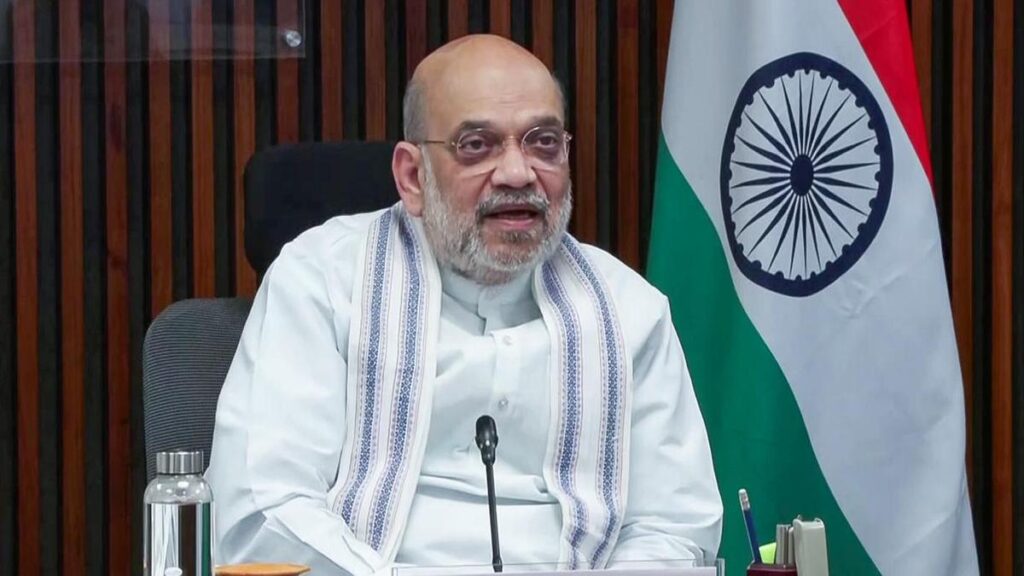
Home Minister Amit Shah highlighted that these approvals represent a “Golden Era” for the Delhi-Mumbai Industrial Corridor (DMIC). By linking the high-tech manufacturing at Dholera with a rapid rail network and modernizing central Indian logistics hubs like Nagpur, the government is building the physical foundation for a $5 trillion economy.
“This project will play a crucial role in establishing Gujarat as a global centre for manufacturing and logistics while also generating significant employment. It is a powerful testament to PM Modi’s visionary goal.” — Amit Shah, Union Home Minister.

