
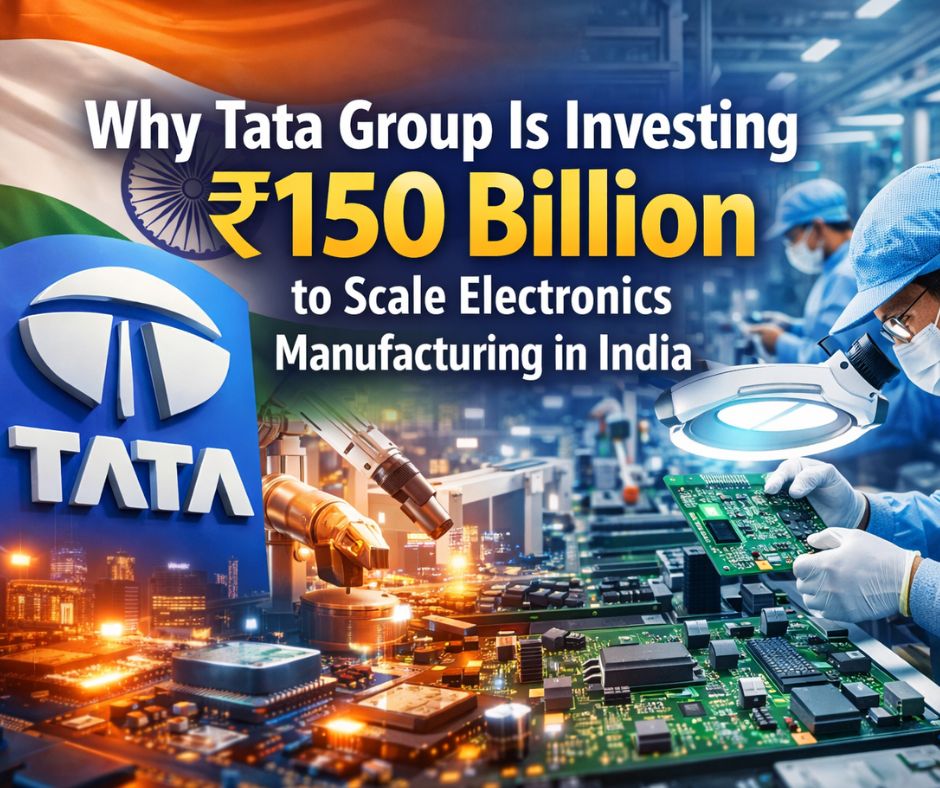
For decades, the “Made in China” label was the undisputed king of the consumer electronics world. However, a seismic shift is underway and the Tata Group is positioning itself as the primary architect of India’s response. The recent announcement of an additional ₹150 billion ($1.8B+) investment into its electronics arm isn’t just a corporate expansion; it is a strategic play to dismantle the monopoly of East Asian manufacturing hubs.
With total investments in this sector now hovering around ₹450 billion Tata is no longer just “experimenting” with hardware. They are building a vertically integrated powerhouse designed to be the backbone of Apple’s global diversification.
Why This Matters: Beyond the Assembly Line
Most people view electronics manufacturing through the lens of assembly—putting parts together. But the real value (and the real profit) lies in backward integration. This is why Tata’s latest move is a game-changer:
- Breaking the “Screw-Driver” Economy: Historically, India has been criticized for merely assembling imported parts. Tata is using this capital to invest in tooling, automation, and precision components. By making the “guts” of the phone—the enclosures and mechanical parts—they capture more of the value chain.
- The Apple “Kingmaker” Effect: Apple is notoriously demanding regarding quality and scale. By successfully managing the former Wistron plant and expanding in Tamil Nadu, Tata has proven it can meet Cupertino’s standards. This builds a “trust premium” that will inevitably attract other global tech giants (Samsung, Google, or even EV players).
- Geopolitical Resilience: As the “China + 1” strategy evolves from a boardroom buzzword into a supply chain reality, Tata is providing the world with a credible, large-scale alternative.
Analysis: A New Growth Pillar for the Century-Old Giant
For over a century, Tata has been defined by Steel, Motors, and TCS (IT services). While these sectors remain robust, they are “mature.” Electronics manufacturing represents the group’s “Third Act.”
By merging their expertise in TCS’s software capabilities with Tata Motors’ manufacturing discipline, the group is creating a hybrid model. This investment focuses heavily on automation and supply chain infrastructure, signaling that Tata isn’t just looking for cheap labor—they are looking for high-tech efficiency.
The Big Picture: According to Counterpoint Research, 70% of iPhones sold in the US are now made in India. That statistic was unthinkable five years ago. Tata is the engine making that number possible.
The Economic Ripple Effect
This isn’t just good for Tata’s balance sheet; it’s a catalyst for the Indian ecosystem:
- Job Sophistication: We aren’t just talking about factory floor jobs. These investments require precision engineers, supply chain architects, and automation experts.
- SME Growth: A giant like Tata requires thousands of smaller vendors. This ₹150 billion will flow down into a burgeoning ecosystem of Indian SMEs providing specialized screws, packaging, and logistics.
- The Semiconductor Bridge: While semiconductors are a different beast, the expertise gained in high-precision electronics is a necessary precursor. Tata is essentially “training” its workforce and systems for the eventual move into chip fabrication.