
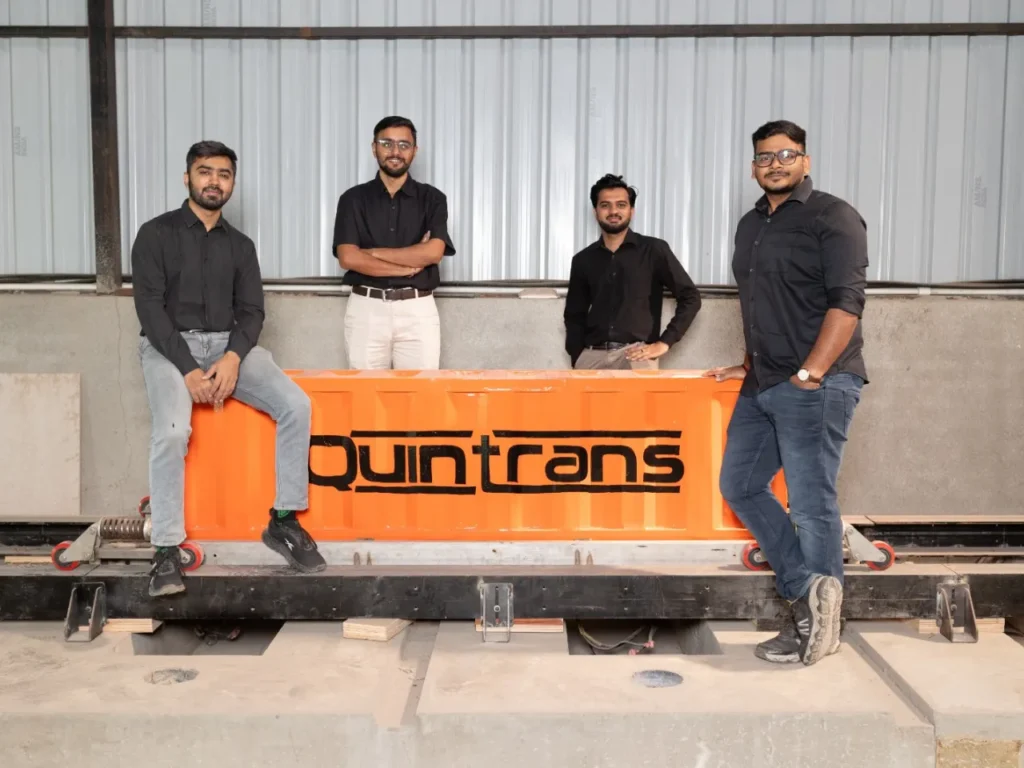
The traditional landscape of industrial motion—long defined by heavy friction, mechanical wear, and a reliance on expensive imports—is facing a homegrown challenge. The recent $750,000 pre-seed infusion into Pune-based deeptech startup Quintrans is more than just a routine funding announcement; it is a signal that India’s manufacturing sector is moving toward high-precision hardware sovereignty.
Here is an analysis of why this development matters for the industrial ecosystem and what it signals for the future of domestic production.
Moving Beyond “Mechanical” Limits
For decades, industrial automation has relied on traditional pneumatic or hydraulic actuators. While reliable, these systems are often bulky and prone to maintenance issues. Quintrans is pivoting the narrative toward electromagnetic and electromechanical linear motion.
By utilizing electromagnetic fields to drive movement, these systems aim for “frictionless” performance. For a manufacturing plant manager, this translates to:
- Reduced Downtime: Fewer moving parts mean less physical wear and tear.
- Micron-Level Precision: Critical for the semiconductor, medical device, and high-end automotive sectors.
- Energy Efficiency: Direct electromagnetic conversion is inherently more efficient than traditional fluid-based power systems.
The Strategic Shift: Why This Matters to You
1. For Industrialists: De-risking the Supply Chain
Historically, high-precision actuators have been the domain of global giants from Germany or Japan. By establishing an in-house manufacturing and testing facility in Pune, Quintrans offers a localized alternative. This reduces lead times and insulates Indian manufacturers from the volatility of international shipping and currency fluctuations.
2. For Vendors & Suppliers: A New High-Tech Anchor
The startup’s goal to produce half a million units annually by 2030 creates a massive opportunity for the local supply chain. This will require specialized raw materials, high-grade electronics, and precision-machined casings, allowing local vendors to move up the value chain from basic fabrication to high-tech component supply.
3. For the Workforce: The Rise of “Engineering-First” Roles
This isn’t just about assembly; it’s about R&D. The hiring focus at Quintrans on electromagnetic actuation and control electronics signals a growing demand for specialized mechatronics engineers within the Indian private sector.
Expert Insight: The Scale of the Opportunity
The numbers tell a compelling story of an “automation explosion.” In FY2022, India moved roughly 6.8 million actuators. That number is projected to hit 11 million by 2026.
Analysis: The gap between current domestic production and projected demand is wide. Most of this growth is currently serviced by imports. A startup like Quintrans isn’t just “another player”; they are positioning themselves to capture the “middle-market” of automation where high precision meets cost-effective local production.
Future Implications: The “Frictionless” Factory
As we look toward 2030, the success of deeptech firms like Quintrans suggests a shift toward the Smart Factory (Industry 4.0).
When linear motion becomes frictionless and digitally controlled, we move closer to “silent” factories that can run 24/7 with minimal human intervention. The integration of hardware with custom control electronics means these components will eventually “talk” to the central factory AI, predicting their own maintenance needs before a failure even occurs.
The backing by Capital-A and IIMA Ventures confirms that the venture capital world is finally gaining the “patience” required for deeptech—understanding that building a better actuator takes longer than building a better app, but the long-term industrial moat is significantly deeper.