
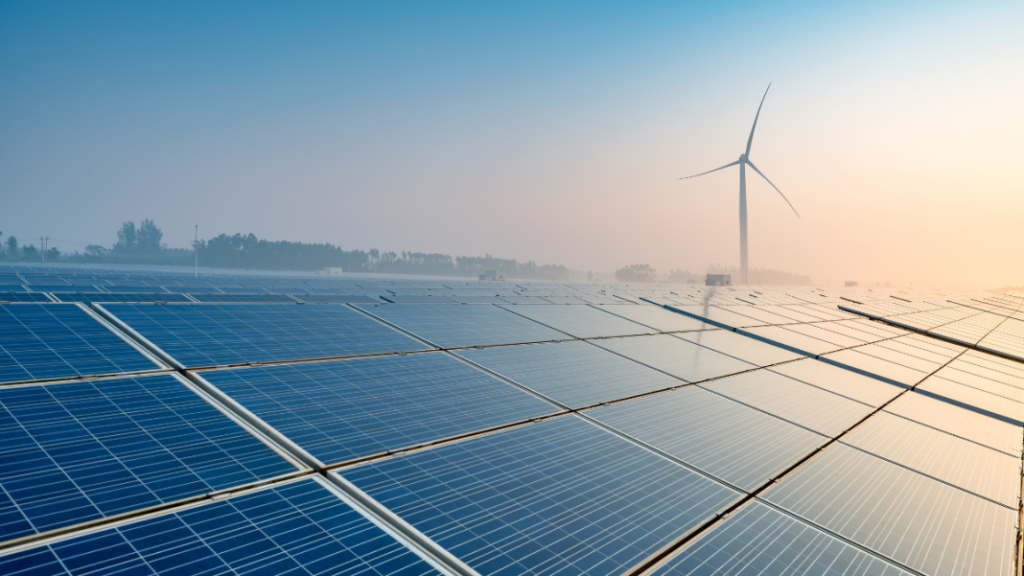
On December 18, 2025 Gujarat’s Deputy Chief Minister Shri Harsh Sanghavi, inaugurated two high-tech manufacturing facilities near Ahmedabad. While the commissioning of a 3 GW solar module plant in Bavla and a 1.2 GW wind nacelle and hub plant in Kalyangarh is a victory for local manufacturing the underlying story is the emergence of a “Renewable Energy Super-Major.”
The INOXGFL Group is moving beyond being a mere equipment supplier; it is building a closed-loop ecosystem that covers everything from advanced chemical materials for batteries to large-scale power generation.
Why This News Matters: The “Full-Stack” Renewables Model
In the global energy race, companies that control their own supply chains win. This inauguration is the first phase of a massive ₹5,500 crore investment roadmap that highlights a shift in India’s industrial strategy:
- Technology Over Assembly: The Bavla facility isn’t just assembling modules; it is producing N-type TOPCon bi-facial modules. These represent the cutting edge of solar science, capturing light from both sides and significantly reducing “degradation”—meaning these panels stay efficient for decades, not just years.
- Mastering the “Heart” of the Turbine: By manufacturing nacelles and hubs locally, Inox Wind is producing the “engine room” of the turbine. This reduces reliance on high-cost imports and specialized logistics, which have historically been the Achilles’ heel of wind projects in India.
- The Revenue Leap: The Group isn’t just scaling capacity; it’s scaling value. With a target of ₹30,000 crore in revenue by FY28, INOXGFL is positioning itself to be the primary engine of India’s 500 GW non-fossil fuel target.
Expert Insights: Strategic Geography and Technical Moats
From a strategic standpoint, these facilities are positioned to exploit the “Renewable Corridor” of Western and Southern India.
- Logistical Synergy: Kalyangarh’s proximity to major wind sites in Gujarat, Rajasthan, and Maharashtra cuts the “last-mile” logistics cost of moving massive turbine components—a cost that can often eat up 10–15% of a project’s budget.
- Next-Gen Turbine Platforms: The new facility is built for the 4X MW class turbines. As the Indian wind sector moves toward lower-wind sites, these larger, more efficient turbines are essential for maintaining a competitive Levelized Cost of Energy (LCoE).
- Integrated Value Chain: Unlike competitors who focus solely on solar or wind, INOXGFL’s presence in battery materials (GFCL EV) and O&M services (Inox Green) creates a “sticky” ecosystem for developers. If you buy their modules, you likely use their maintenance and eventually their storage solutions.
Future Implications: Setting the Standard for 2030
This dual-launch sets a new benchmark for what a “self-reliant” energy manufacturer looks like in 2025 and beyond.
- Export Potential: While the current focus is “Atmanirbhar Bharat,” the scale of 11 GW solar capacity by FY27 suggests that INOXGFL is eyeing global markets. These automated, TOPCon-enabled lines are designed to meet stringent quality standards for the US and European markets.
- Employment Multiplier: The creation of 2,000 jobs in the Ahmedabad cluster will foster a new generation of “green-collar” workers—specialists in automated robotics, thermal management, and power electronics.
- IPP Acceleration: Through its subsidiary Inox Neo, the group is pivoting into being an Independent Power Producer (IPP). This means they will consume their own equipment to build their own power plants, effectively becoming their own best customer and ensuring 100% capacity utilization.
The Bottom Line
The INOXGFL expansion isn’t just about meeting government targets; it’s about industrial dominance. By controlling the technology (TOPCon modules), the core machinery (4X MW nacelles), and the end-to-end services, they are insulating themselves from the volatility of the global energy market.