
The announcement is deceptively simple: commercial chip production has begun in India. But beneath this statement lies a tectonic shift—a quiet, hard-fought transition from aspiration to tangible output. For industrialists, manufacturers and technology leaders this is not merely a milestone in semiconductor manufacturing; it is the activation of a fundamental, long-missing component in India’s industrial backbone.
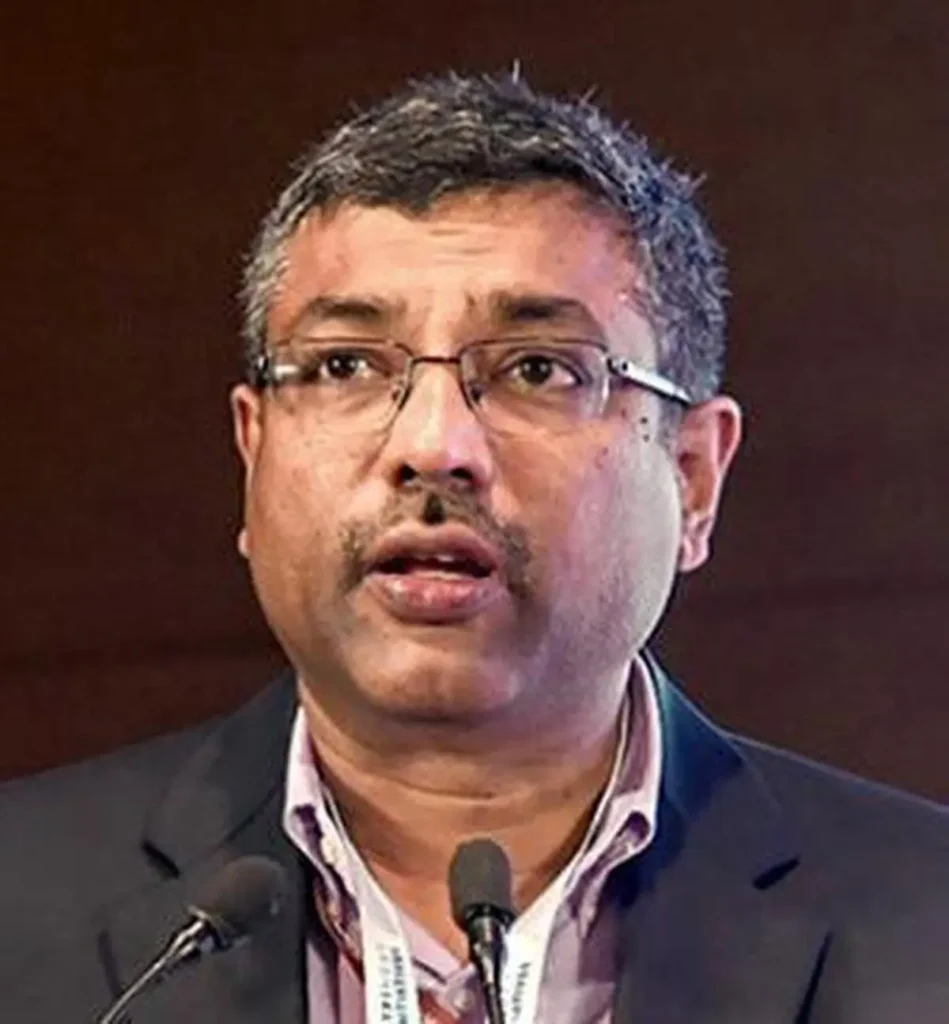
The significance of MeitY Secretary S. Krishnan’s confirmation extends far beyond the ten grounded fabrication units. It marks the moment India moves from being a passive consumer in the global electronics value chain to an active, integrated producer. This transition reshapes risk calculus, design possibilities and strategic planning for every sector that runs on modern technology.
The Real Achievement: Closing the Loop Between Design and Fabrication
For decades, India’s considerable chip design talent—engineers who architect semiconductors—operated in a vacuum. Their intricate blueprints had to be sent abroad for fabrication, creating a disconnect between design and manufacturing, slowing iteration, and adding layers of logistical and geopolitical risk. The start of commercial production begins to close this loop.
“The true value isn’t just in substituting imports,” explains a veteran electronics manufacturing services (EMS) provider. “It’s in the potential for co-creation. When our design houses can walk into a foundry on the same continent, they can collaborate on optimizing chips for cost, power, and performance for the Indian—and global—market. This symbiotic relationship is what builds a resilient ecosystem, not just a factory.”
This “Phase 1” of the India Semiconductor Mission (ISM), now nearing full commitment, represents the critical foundation. The infrastructure upgrades, like the HCL modernization mentioned, are the unglamorous yet essential work of creating the high-reliability utility backbone—power, water, chemicals—that fabs demand. This is nation-scale industrial engineering.
The Confluence of Two Revolutions: Silicon and AI
Secretary Krishnan’s deliberate linkage of semiconductor progress with the upcoming AI Impact Summit is a masterstroke of strategic narrative. It frames these not as parallel tracks, but as converging forces.
Semiconductors are the physical substrate of AI. Every large language model, every computer vision system, every smart factory robot runs on chips. By fostering domestic chip manufacturing alongside a national AI mobilization, India is strategically attempting to control more of its own technological destiny. The “impact” they speak of is amplified when you can tailor silicon to your own AI ambitions, whether for frugal Agri-tech solutions or scalable digital public infrastructure.
The Human Equation: Navigating the Cognitive Shift
Krishnan’s candid address of AI’s job impact is notably precise. His observation that AI uniquely places cognitive professionals at risk marks a departure from past industrial revolutions that primarily affected manual labor. This acknowledgment is crucial for the private sector’s workforce planning.
“The disruption won’t be about replacing engineers with robots on an assembly line,” notes a strategic HR leader in the tech sector. “It will be about augmenting—or displacing—the analyst, the content creator, the mid-level programmer. The new jobs won’t be like the old ones; they will be at the intersection of domain expertise and AI oversight. Companies must invest now in this hybrid skillset.”
The government’s approach—hosting hundreds of pre-summit engagements—is less about dictating policy and more about fostering a shared understanding and building coalitions for this transition. This is policymaking as ecosystem cultivation.
Looking Ahead: The ISM 2.0 Horizon
With ISM 1.0 nearly committed, the horizon for ISM 2.0 beckons. Industry watchers should expect this next phase to focus on:
- Advanced Nodes and Specialization: Moving beyond initial commercial chips to more advanced or specialized semiconductors (like analog, power, or compound semiconductors for defense and telecom).
- Material and Equipment Ecosystem: Attracting and nurturing suppliers of the gases, chemicals, and fabrication tools—the deeper layers of the supply chain.
- Global Integration: Positioning India not just as a domestic supplier, but as a trusted, complementary node in the complex global semiconductor network, especially as companies seek geographic diversification.
The Bottom Line for Industry
For India’s industrialists and corporate strategists, the message is clear: the foundation for a more integrated, technologically sovereign manufacturing era is being poured. The business case for product development is evolving. Factors like “in-country chip availability” and “design-to-fab collaboration” are transitioning from hypothetical advantages to tangible variables in project timelines and product roadmaps.
The production of the first commercial chip is not the end of a journey. It is the moment the compass needle finally settles, pointing toward a future where India’s industrial output is not just assembled, but conceived and rooted in its own silicon soil. The real work—of scaling, innovating, and integrating—begins now.