
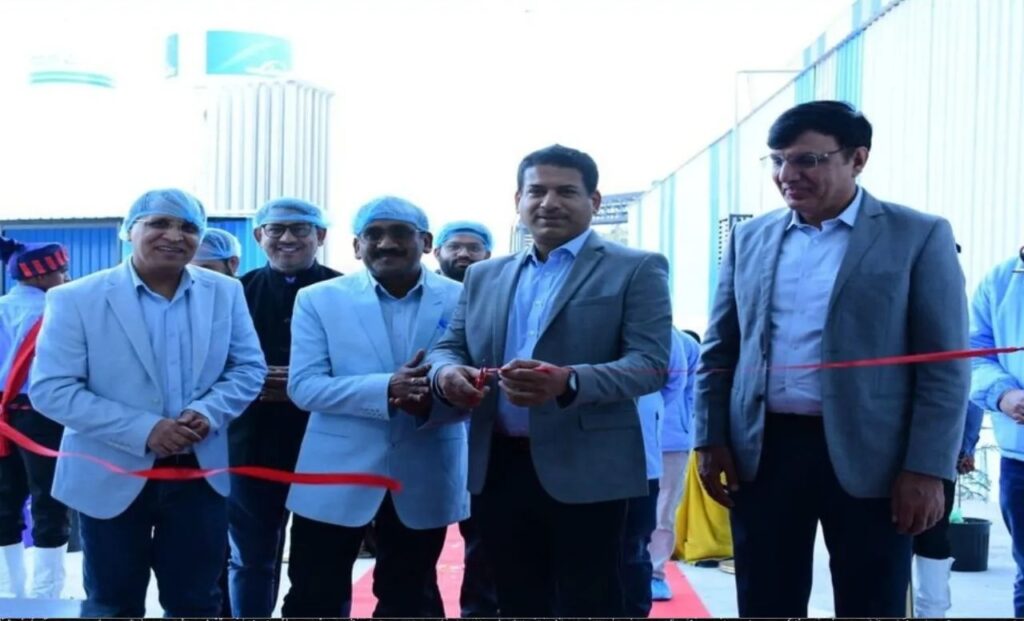

In a quiet industrial zone in Dadri, Uttar Pradesh a significant shift in India’s renewable energy landscape just became tangible. Last week, Fujiyama Power Systems Limited flipped the switch on a new 1 GW solar cell manufacturing plant. While new factories open routinely, this one is different. It’s not just an expansion; it’s a strategic move that tightens a crucial link in the country’s solar supply chain and signals a mature turn in India’s green manufacturing ambitions.
For years, India’s booming solar panel industry has been vulnerable. While we excelled at assembling panels, a critical component—the solar cell—was largely imported. This created a precarious dependency, subjecting domestic manufacturers to global price swings, trade disputes, and logistical snarls. Fujiyama’s new facility, inaugurated by senior officials from the Ministry of New and Renewable Energy (MNRE), directly tackles this weakness.
Why This Move Matters: Control Over the Core
Think of a solar panel like a sandwich. The bread—the glass front and backsheet—is readily available. But the essential filling, the silicon solar cell that actually converts sunlight to electricity, has often been sourced from abroad. By bringing this core technology in-house, Fujiyama isn’t just adding a production line; it’s securing the heart of its product.
Chairman Pawan Kumar Garg’s statement cuts to the chase: this is about “visibility and control.” For a company with 1.6 GW of panel manufacturing capacity (most of it right next door in Dadri), owning the cell supply means predictability. It buffers the business from the kind of international trade uncertainties that can paralyze production overnight. In an industry driven by large government tenders and tight project deadlines, this reliability isn’t just convenient—it’s a competitive fortress.
Execution as a Benchmark
The project’s execution story is noteworthy. Completed in six months and under budget, it defies the often-plodding pace of large-scale industrial projects. This efficiency speaks to more than just good management; it reflects a seasoned understanding of the regulatory and construction landscape, a capability that will be invaluable as India races to meet its renewable targets. It proves that rapid, cost-effective backward integration is possible, setting a benchmark for other Indian manufacturers.
The Bigger Picture: A Blueprint for Atmanirbhar Bharat in Energy
Fujiyama’s strategy is a microcosm of a larger national goal. The government has been pushing for deeper domestic manufacturing through schemes like the Production Linked Incentive (PLI). Fujiyama’s move from assembling panels to manufacturing their most valuable component is a textbook example of the “backward integration” these policies aim to inspire.
Furthermore, Fujiyama’s integrated footprint—spanning panels, inverters, batteries, and power electronics across four states—isn’t just about scale. It’s about creating a coherent ecosystem. A developer or homeowner can now source a complete, Made-in-India solar-plus-storage solution from a single company, with each component engineered to work seamlessly with the next. This end-to-end capability is where true value and innovation will flourish in the coming decade.
Looking Ahead
The inauguration in Dadri is more than a ribbon-cutting. It’s a statement that India’s solar industry is moving beyond assembly to master the entire value chain. For Fujiyama, it means greater control, better margins, and a resilient supply chain. For the country, it represents another step toward energy security and technological sovereignty in a critical sector.
The true test, of course, will be in the quality, efficiency, and cost of these Indian-made cells. But by taking this leap, Fujiyama has not only fortified its own business but has also illuminated the path for an entire industry striving to build a sustainable future from the ground up.


