

For years India’s shining solar dreams had a hidden crack : we imported the very foundation of solar panels. That’s about to change. In a quiet corner of Andhra Pradesh’s Anakapalli district a revolution is being built. The state has just greenlit a project that doesn’t just make solar panels—it makes the heart of them. This is India’s first step toward true energy independence.
The Big Green Light
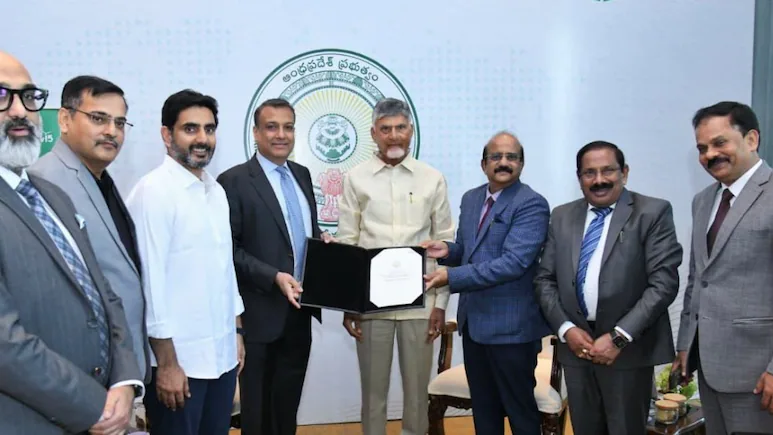
The Andhra Pradesh State Investment Promotion Board (SIPB) led by Chief Minister Chandrababu Naidu has given its official nod. A proposal that started as an MoU is now a concrete plan heading to the state cabinet. The company behind it? ReNew Photovoltaics part of the giant ReNew Energy group. They’re investing a staggering Rs 3,990 crore right here in Rambilli.
But what are they actually making? Think of a solar panel like a sandwich. For years, we’ve been importing the bread (the ingots and wafers) and just putting the filling (cells and modules) together here. This new plant will be India’s first commercial-scale facility to bake that bread ourselves. It will produce 6 GW of these critical solar ingots and wafers—the essential building blocks without which no solar cell exists.
Why This “First” is a Game-Changer
- Breaking the China Chain: Over 80% of the world’s solar wafers come from one country. This creates risk. By making these core components at home India secures its solar manufacturing supply chain. It’s a giant leap for the Atmanirbhar Bharat (Self-Reliant India) mission in the renewable sector.
- Powering Our 2030 Goal: India aims for 300 GW of solar capacity by 2030. You can’t build a skyscraper on a borrowed foundation. This plant will be a dedicated, large-scale supplier for the nation’s module makers turning a bottleneck into a backbone.
- Jobs and Growth: This isn’t just a factory; it’s a community creator. The project promises around 1,200 high-skilled and semi-skilled jobs. It will need a small town’s worth of power (95 MW) and water sparking local infrastructure development.
The Road Ahead
The land—about 130-140 acres—is identified. The central government’s Production-Linked Incentive (PLI) scheme support is in place. The timeline is set: construction to finish by March 2026, with the first ‘Made-in-India’ ingots and wafers rolling out by January 2028.
This is more than an industrial approval. It’s a statement. Andhra Pradesh under CM Naidu’s push, is positioning itself not just as a solar power generator, but as the solar manufacturing hub of India. It’s a clever, long-term bet on the new energy economy.


